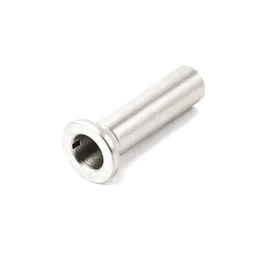
Align, position, and secure components with dowel pins, clevis pins, spring pins, and related fastening hardware.
Drive with a hammer to expand and secure anchors in place.
Secure anything from signs to heavy machinery in concrete, brick, and drywall.
Press into holes in thin materials like panels and circuit boards to permanently join or align them.
Secure parts in place and lock with a cotter pin or retaining ring.
Secure the ends of clevis pins and shafts to keep components in place.
Hold loose papers together without creating a permanent mark.
Cut to the length you need for positioning and holding parts in place.
Align parts before assembly or use as a pivot, shaft, or hinge to join moving components.
Slip through holes in telescoping tubing and wrap around to secure.
Used with nuts to create a stronger joint than flat and rounded screws.
Slide into holes on clevis pins and shafts and snap down the locking ring so parts won't fall off.
Cut a custom length to transfer torque from shafts to components such as gears and sprockets.
Transmit torque from rotating shafts to gears, sprockets, and other machine parts.
Create custom pins for keeping components in place — all with material certificates for traceability.
Drive into wood, plastic, drywall, and masonry.
Pull out pins.
Strike with a hammer to install pins.
Strike with a hammer to loosen and remove pins and rivets.
Fasten materials to bulletin boards and drywall without tools.
Secure quick-release pins when you don't have a through hole.
Hold quick-release pins in holes that are oversized or out of round.
Fasten or remove components on equipment with a spring-loaded retaining ball.
Install and remove blind, solid, hollow, and other types of rivets.
Join materials together permanently, especially when too thin or fragile to fasten with screws.
Fasten tags, labels, and other objects to fabric.
Drive like nails but hold like screws in drilled holes in wood, plastic, drywall, and masonry.
Use with shear hubs to break at a specific torque and safeguard machinery from overloads.
Rotate parts around the cylinder under the head to guide and align them during installation.
Use the unthreaded end as a pivot point, hinge, shaft, or locator pin.
Secure clevis pins, connect components, or add a pull handle; also known as key rings.
Join pieces of telescoping tubing using spring force.
Squeeze and insert into tight holes to hold parts in place with tension.
Act as a stop for positioning ball-nose and long-nose spring plungers.
Install spring plungers from the nose end without depressing the nose.
Secure ball-nose and long-nose spring plungers to fixture surfaces.
Apply accurate, consistent pressure for positioning, indexing, and ejecting parts.
Join studs and pins to metal, leaving no marks on the back of the material.
Press, weld, or screw in place to add a threaded fastening point.
Turn by hand for easy fastening, use as a handle, or attach as a point for straps and clamps.
Secure upholstery to a frame.
Fit snugly into tapered holes to secure, position, and align components.
Tighten and loosen by hand without the need for tools.
Weld in place for greater rigidity and strength than other pins.
Connect and repair wood pieces and joints.