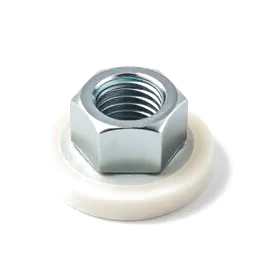
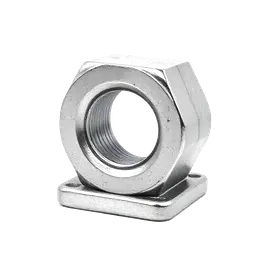
Adhesive-Mount Nuts
Attach threads to material that's too thin for a threaded insert.
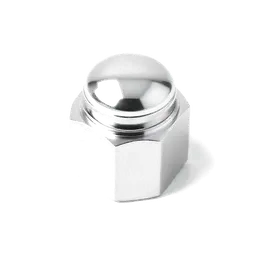
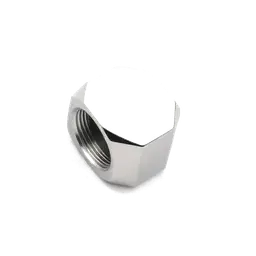
Cap Nuts
Cover and protect threads while adding a finished look; also known as acorn nuts.
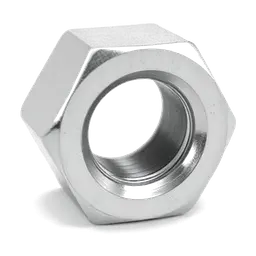
Coupling Nuts
Connect and extend threaded rods.
Dowel Nuts
Form joints in blind holes in wood.
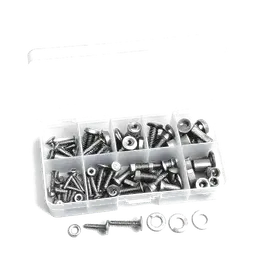
Fastener Assortments
Keep a variety of common screws, nuts, and washers on hand.
Flange Nuts
The flange distributes pressure, so you don't need a washer.
Lug Nuts
Secure pneumatic wheels to axles.
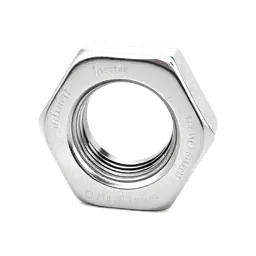
Panel Nuts
Extremely thin for tight spots such as electrical panels; also known as dress nuts.
Press-Fit Nuts
Push into drilled or punched holes to add threads to thin panels.
Push Nuts
Press onto threads for a light duty hold that's faster to install than typical nuts.
Push-Button Nuts
Disengage the threads to quickly slide along threaded rods.
Rivet-Mount Nuts
Add threads in hard-to-reach areas and materials that are too thin to be tapped.
Screw-Mount Nuts
Mount with screws, rivets, and nails to add threads to a surface.
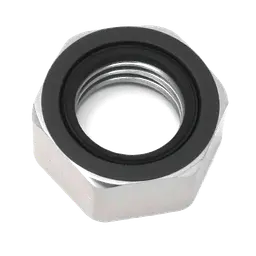
Sealing Nuts
Prevent leaks and block out contaminants with a rubber seal.
Slotted Round Nuts
Fasten with a screwdriver in tight spots where there's no room for a wrench.
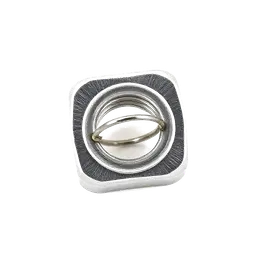
Snap-In Nuts
Push into square holes in thin materials to add bolts for aligning off-center parts.
Socket Nuts
Install in recessed holes and tight spots where a wrench won't fit; also known as Allen nuts.
Split Nuts
Swivel to attach at any point on a threaded rod for quick installation.
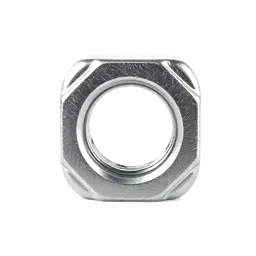
Square Nuts
Flat sides won't spin in channels and square holes.
Standoffs
Separate, position, or connect components in assemblies.
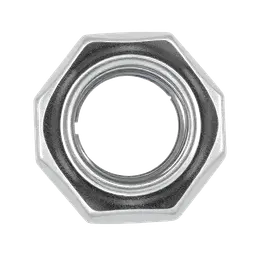
Tamper-Resistant Nuts
Hard to detach without special tools to prevent unwanted removal.
Thumb Nuts / Wing Nuts
Easy to tighten and loosen by hand for making frequent adjustments; wing styles give extra leverage.
Tube-Connecting Nuts
Push inside tubes to join them with a threaded stud instead of welding.
Weld Nuts
Weld to metal surfaces to add permanent threads.