Industrial-grade threaded fasteners for every assembly.
With a deeper drive than flat and rounded head screws, these withstand more torque for a tighter hold.
Sit just above the surface for a low-profile finish and hold tighter than flat head screws.
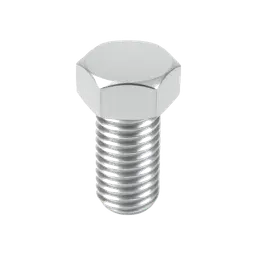
Used with nuts to create a stronger joint than flat and rounded screws.
Fit in countersunk holes for a flush finish that won't snag on surrounding parts.
Fasten a range of materials together without needing to tap the hole first.
Rotate parts around the cylinder under the head to guide and align them during installation.
Exert pressure at the tip to hold parts in place, unlike screws that hold material together with threads.
Fasten material to wood or pieces of wood to each other.
Tighten and loosen by hand without the need for tools.
A smooth head provides a finished look while a square neck keeps the bolt in place when using a nut.
12 contact points handle more torque than a hex head while a flange replaces the need for a washer.
The domed top sits slightly above the surface of countersunk holes for a decorative look.
Fasten panels of drywall to materials such as wood, metal and drywall.
Secure panels and enclosures while still having access to them.
Anchor parts to masonry and concrete without tapping the hole first.
Press, weld, or screw in place to add a threaded fastening point.
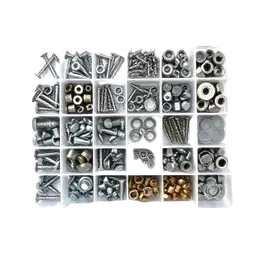
Keep a variety of common screws, nuts, and washers on hand.
Turn the large flat sides with a wrench into square holes that stop further rotation.
Create a flush joint to allow movement in tight spaces such as grain elevators and belting systems.
Suspend pipe and other fixtures with wire or cable ties.
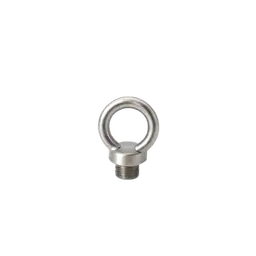
Turn by hand for easy fastening, use as a handle, or attach as a point for straps and clamps.
The head sits flush with countersunk holes while the bolt stays in place when tightening a nut.
Hold material under the bent head while the other end is tightened down with a nut.
Create a tamper-resistant joint with a head that can only be removed with a 5-point socket.
Create vibration-resistant connections between D-sub cords and panels.
Make secure joints between boards, butcher blocks, and countertops.
Screw into holes to join two pieces of wood.
Create custom low-profile fasteners with binding barrel posts, caps, and screws.
Anchor, connect, or hang components in a wide variety of applications.
Add threads to thin panels with access from only one side; also known as blind inserts.
Weld to metal surfaces to add permanent threads.
Separate, position, or connect components in assemblies.
Create a finished look on standoffs and protect them from dirt and debris.
Use the unthreaded end as a pivot point, hinge, shaft, or locator pin.
Apply accurate, consistent pressure for positioning, indexing, and ejecting parts.
Join threads of a different type, size, and gender.
Secure anything from signs to heavy machinery in concrete, brick, and drywall.
Press into holes in thin materials like panels and circuit boards to permanently join or align them.
Drive like nails but hold like screws in drilled holes in wood, plastic, drywall, and masonry.
Drive into wood, plastic, drywall, and masonry.
Replace your anchor toggle if it falls when removing your toggle bolt.
Join materials together permanently, especially when too thin or fragile to fasten with screws.
Pair with drivers to turn screws.
Turn fasteners from either end and reach into tight spots.
Tighten and loosen screws.
Apply precise torque as you fasten screws to prevent overtightening.
Use with a hammer drill to install screws into masonry and concrete.
To turn fasteners in hard-to-reach spots, there's a long shaft and a grip for your whole hand.
Grip and start turning screws that are too small to hold or located in hard-to-reach spots.
Used to install carbide inserts in cutting tools — a handle limits the amount of torque generated.
Crank the handle to fasten nuts and bolts quickly.
Turn flat-end bolts and screws.
Comfort with every turn — these upgrade your L-keys into T-handle keys.
Create a tool that's as long as you need to reach deeply recessed fasteners.
Drive with a hammer to expand and secure anchors in place.
Attract or repel metal objects to hang, secure, or position them.
Drop onto fastener heads to keep screwdrivers, wrenches, and pliers from sliding off.