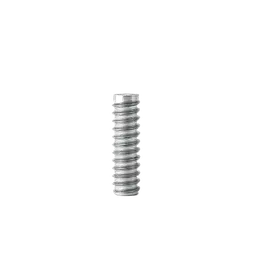
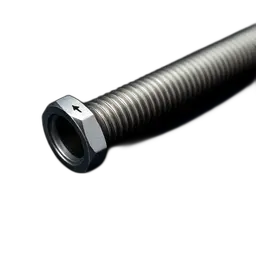
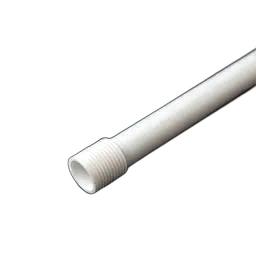
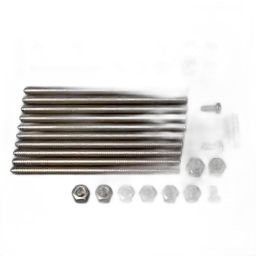
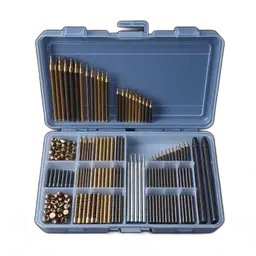
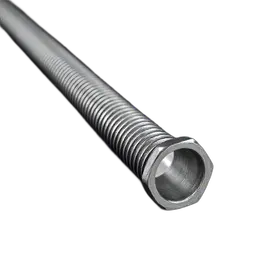
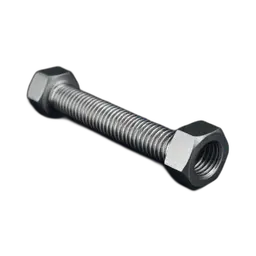
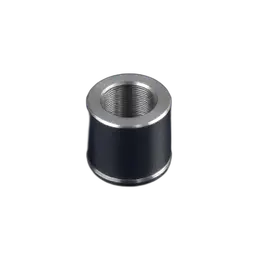
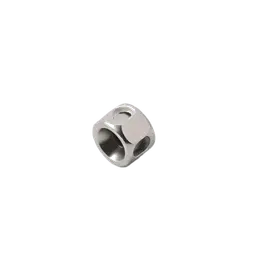
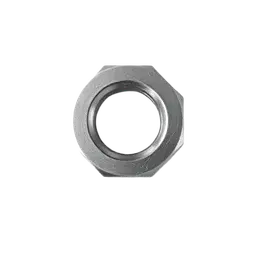
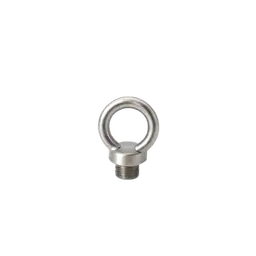
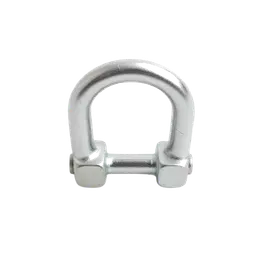
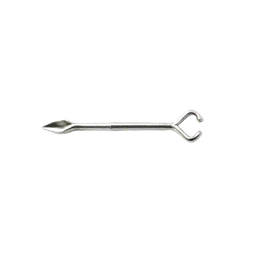
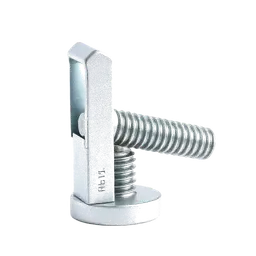
Continuous-thread rods, studs and connectors.
Keep counterclockwise-moving parts from loosening once fastened.
Keep grime off unused threads in areas such as food plants and labs.
All the rods and nuts you need to connect standard-size pipe flanges.
A range of sizes to anchor, connect, or hang components.
Anchor, connect, or hang components in a wide variety of applications.
No need to hunt for compatible nuts.
Separate, position, or connect components in assemblies.
Provide smooth travel where high speeds, accurate positioning, and repeatable movement are required.
Apply pressure through a flat-tipped screw to hold material in place.
Use with rod ends and swivel joints to link components in push/pull assemblies.
Connect and extend threaded rods.
Brace and secure the ends of ball screws and precision lead screws.
Connect valve bodies and floats to build or repair a float valve.
Connect gas springs to mounting studs and brackets.
Attach gas springs to panels, lids, and doors using a bracket or stud.
Suspend pipe and other fixtures with wire or cable ties.
Support idler sprockets and pulleys in tensioning applications.
Connect lamp components and conceal wires when building or repairing lamps.
Position components and limit travel along a lead screw.
Move components in a straight line in clamping and heavy duty lifting and lowering applications.
Create a linear positioning system on a rotary shaft without a lead screw.
Pair with linear bearings and shaft supports to create smooth, precise motion.
Generally thicker and more rigid than tubing for distributing liquids and gases.
Pair with precision lead screw nuts to make custom flange nuts that move items along lead screws.
Pair with a motor for accurate starts and stops in automated motion and positioning applications.
Attach to rods, pipe, and tubing to make pivot and hinge points.
Use with connecting rods to support loads and control steering, tensioning, or pivoting motion.
Create more points of contact to handle much higher loads than ball screws and nuts of the same size.
Pair with gears, sprockets, and bearings to transmit rotary motion.
Secure setup clamps and fixtures to your machine table or assemble heavy machines.
Increase or reduce your shaft's diameter to fit equipment, or replace damaged shaft ends.
Rotate parts around the cylinder under the head to guide and align them during installation.
Use the unthreaded end as a pivot point, hinge, shaft, or locator pin.
Press, weld, or screw in place to add a threaded fastening point.
Turn by hand for easy fastening, use as a handle, or attach as a point for straps and clamps.
Join threads of a different type, size, and gender.
Create new threads or repair stripped threads.
Install directly into a flat surface for more holding power than threaded rod mounts.
Quickly install threaded rods and studs with a cordless drill, instead of by hand.
Cut rods and bolts while leaving their threads intact.
Mount across roof joists to hang threaded rod and route pipe and duct in areas with no anchor point.
Hang threaded rod from ceilings, walls, beams, and joists.
Hold and tighten threaded studs and rods.